Napster–HUMAIN Arabic agents: what buyers should test
Separate the new partnership from existing API access, then test actions, memory and handoff before rollout.
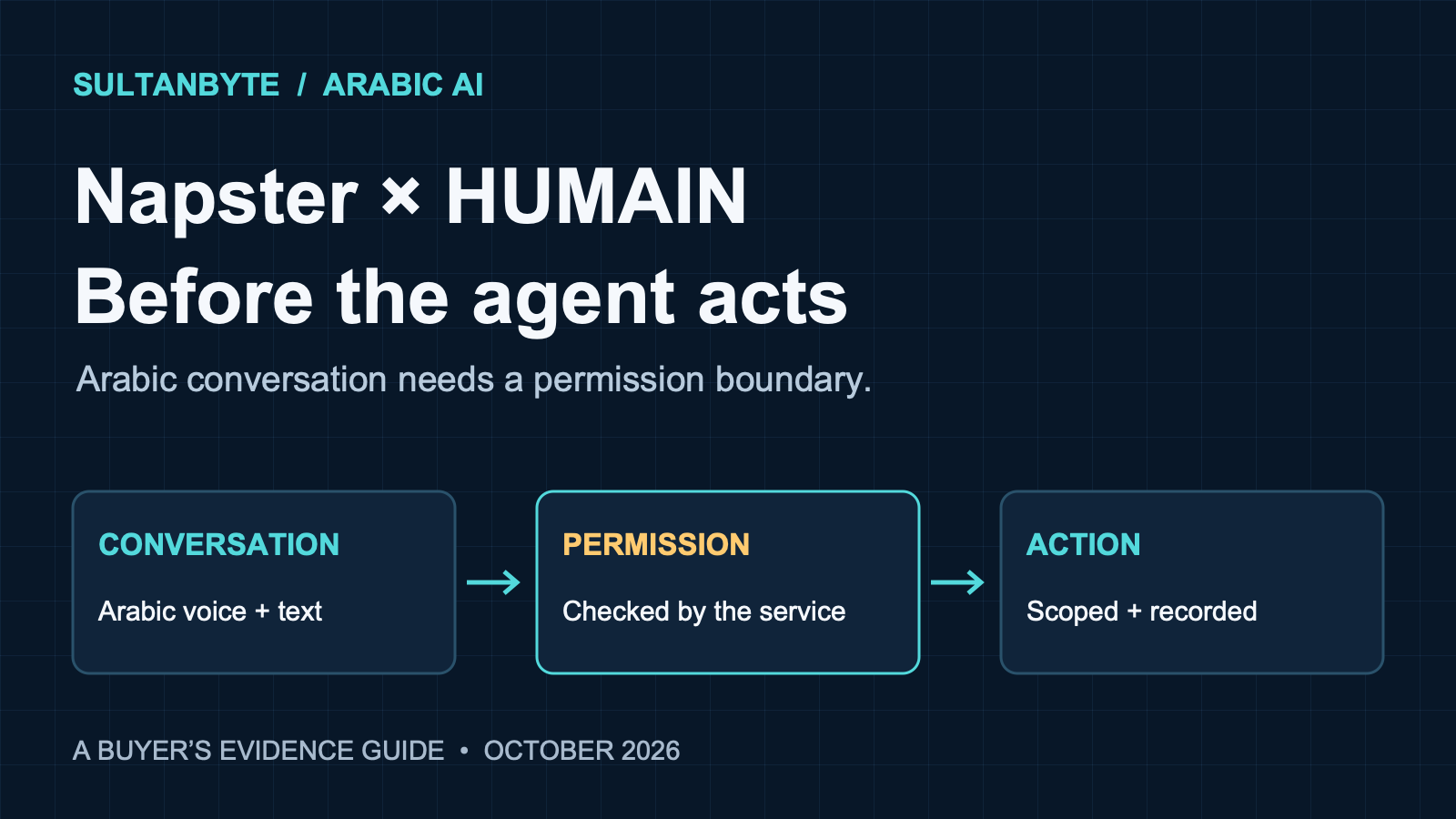
Napster and HUMAIN are bringing Arabic language and speech services into a platform for conversational agents with video presence and persistent memory. For a business buying an Arabic customer-service assistant, the interesting part is the connection between those components. A fluent conversation still needs to end in the right action, for the right customer.
The partnership announcement describes plans to combine HUMAIN IQ, ALLAM and HUMAIN Voice with Napster's agent infrastructure. It targets public and private organisations across MENA, with Napster planning to bring the capabilities to existing clients in Saudi Arabia and the Middle East.
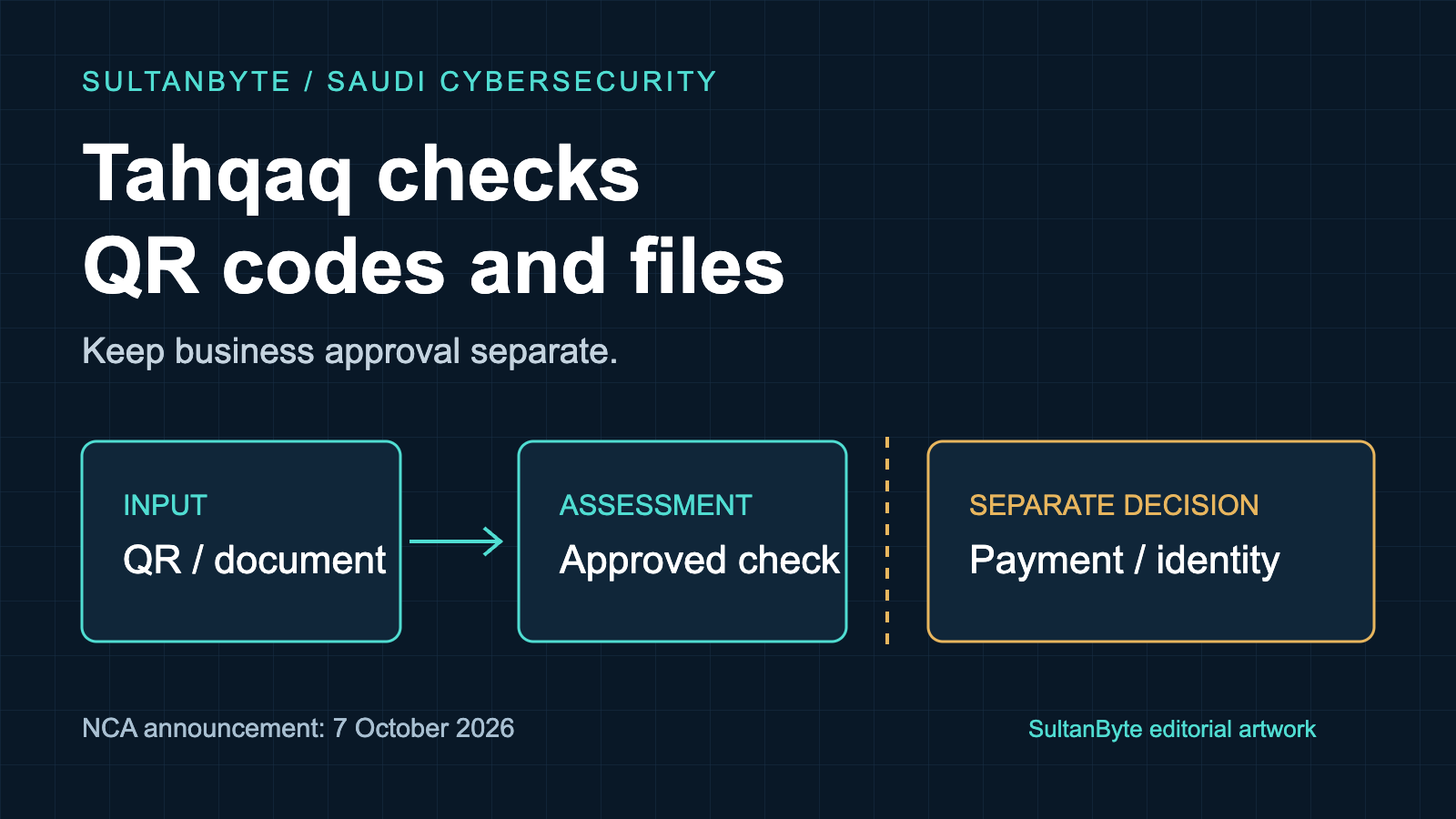
There is a date discrepancy: the page header says 6 October 2026, while the release's Riyadh dateline says 12 October. EntArabi reported the agreement on 12 October. That coverage describes the same proposed integration; it does not establish measured customer results.
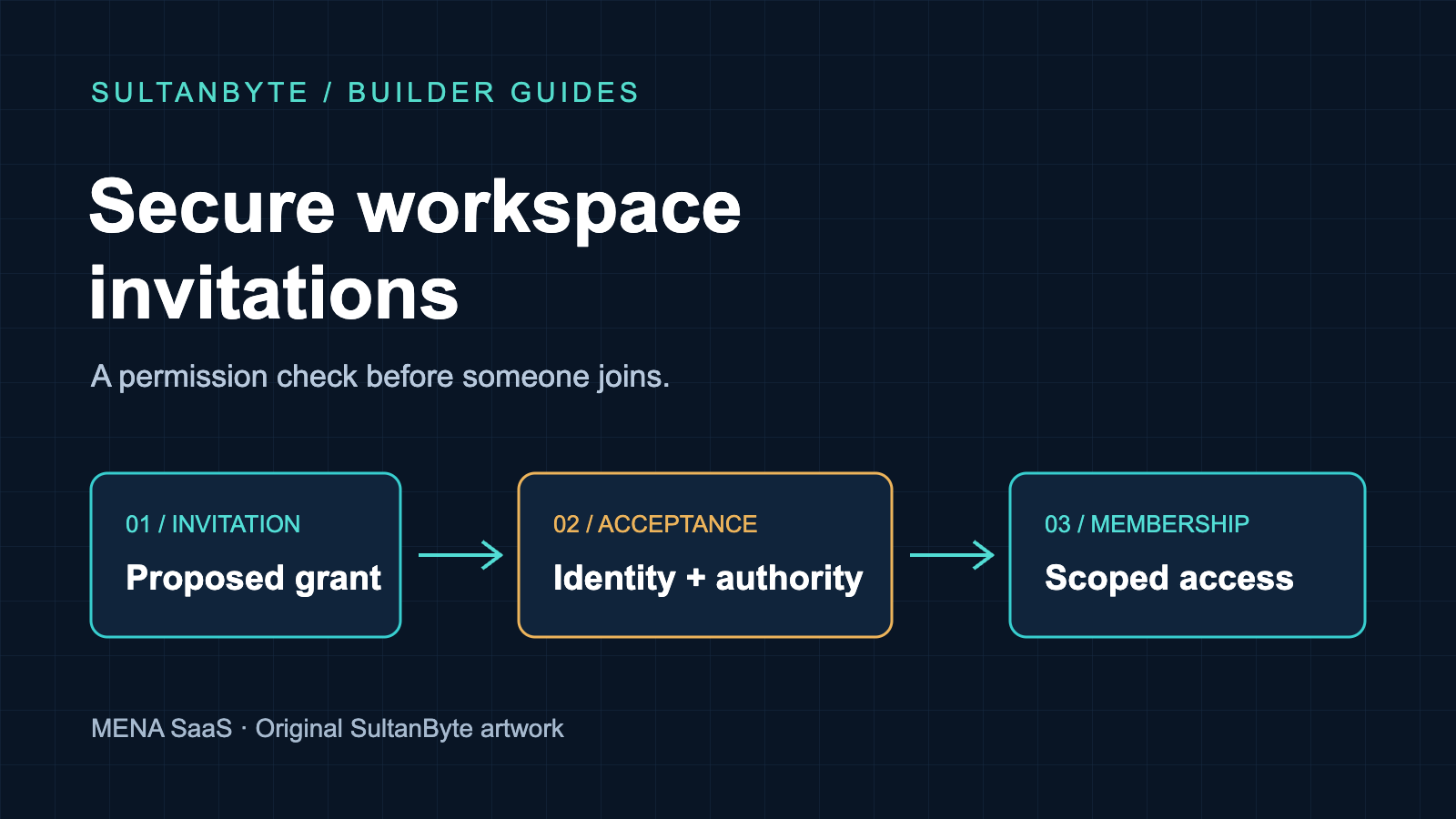
Cover: original SultanByte artwork showing Arabic conversation passing through a permission check before a business action.
A broader partnership, not the first appearance of HUMAIN
Napster's developer changelog dated 1 June 2026 already lists HUMAIN as an LLM provider powered by Allam. It says access is not enabled by default and directs developers to request it. The October agreement therefore should not be described as the first availability of HUMAIN through Napster.
The newer release describes a broader combination: ALLAM for text generation, summarisation and function calling; HUMAIN Voice for real-time speech recognition and speech synthesis; and Napster for visual presence, persona technology and multimodal agents. Persistent memory is part of the proposed experience.
These are the companies' descriptions. The announcement does not supply an end-to-end latency benchmark, a customer acceptance report or a country-by-country availability matrix. An existing provider option is evidence of an integration route, not proof that the complete voice-and-video experience is ready for every buyer.
Ask the supplier to demonstrate the exact configuration being offered. Record which model and speech services it uses, which capabilities require separate enablement, and what is included in the support agreement. Keep that configuration attached to the pilot results so a later component change does not silently inherit an earlier approval.
Buy a completed interaction, not an impressive avatar
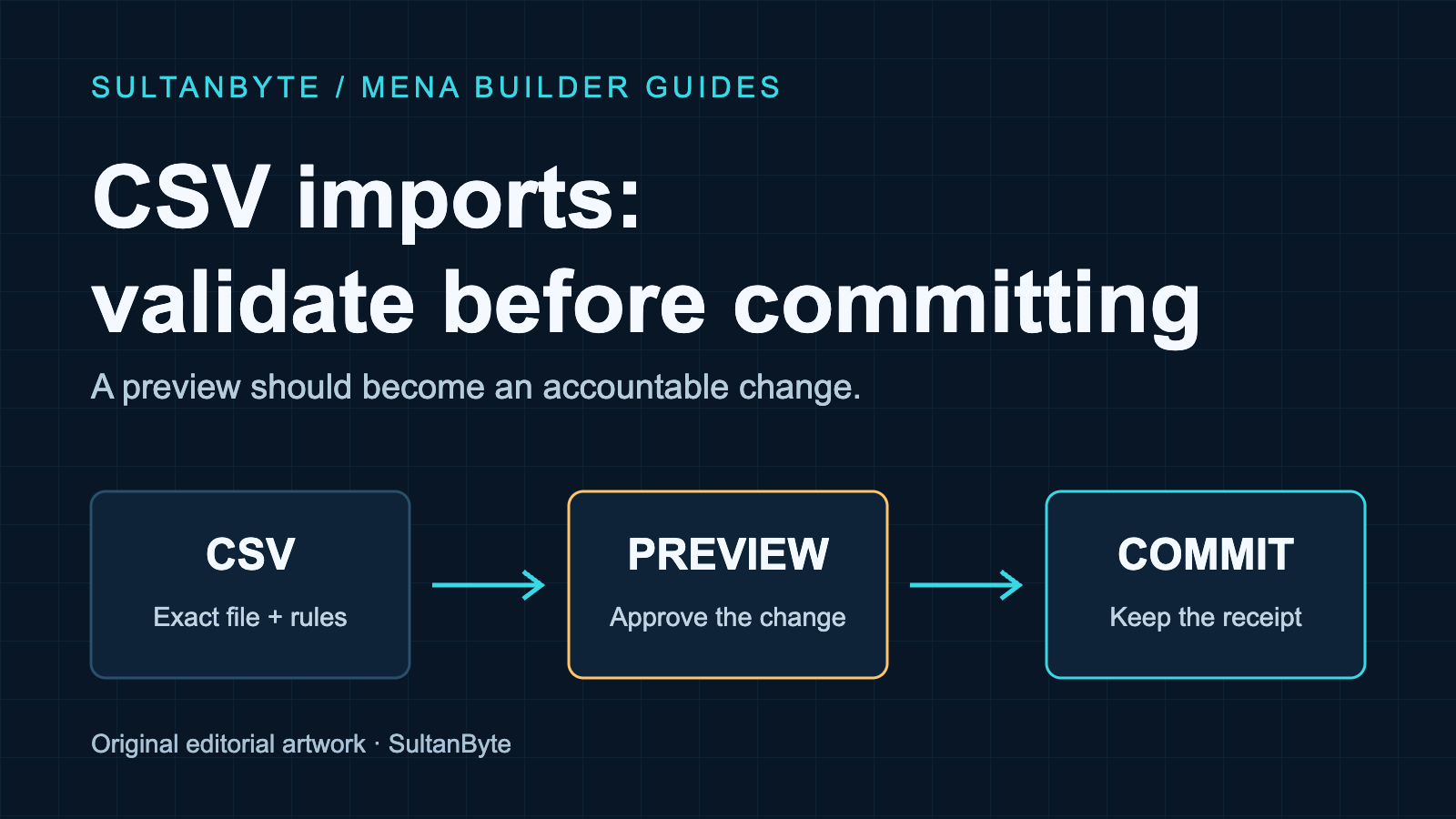
Choose one bounded customer journey before evaluating the interface. A useful first example is explaining an order's status after the customer has authenticated. Keep address changes, refunds and payment instructions outside the initial permission set.
Test the whole interaction: the customer speaks, the recogniser produces text, the model selects a response or tool, the business service answers, and the agent communicates the result. Review where a wrong order reference first appears. A correct final sentence cannot compensate for a lookup against somebody else's account.
Measure completed, correct journeys alongside handoffs and failures. Keep response delay, interruption handling and tool errors visible. Compare a text-only version of the same workflow with the voice-and-video version. If video adds cost or delay without helping customers complete the task, make it optional rather than treating it as the reason to buy.
For a Saudi pilot, select speakers and business vocabulary from the intended service population. For a UAE deployment, build a separate sample reflecting that operation's customers and language mix. Neither country is one dialect, and a Saudi-developed model does not establish performance for every Arabic-speaking market. SultanByte's Saudi speech-AI analysis explains why a recogniser's test score and a successful customer interaction are different evidence.
Put permission outside the conversation
A voice that sounds confident can still request the wrong operation. Function calling should produce a proposed structured action that the application checks, not become a shortcut around existing access controls.
OWASP's excessive-agency guidance identifies excessive functionality, permissions and autonomy as sources of damaging agent behaviour. It recommends checking authorisation in downstream systems and requiring human approval for high-impact actions. These are general safeguards, not findings about either partner's product.
For the order-status pilot, expose a narrow read operation. Derive the customer scope from the authenticated session, not a name spoken to the avatar. Reject a foreign order reference even if the conversation contains a persuasive explanation for accessing it.
If a later phase adds changes, display the exact proposed mutation and require an appropriate confirmation. Keep retries tied to the same operation so a dropped connection does not repeat a consequential action. The service should return a durable result that the agent can report without inventing whether the request succeeded.
AWS's agent-permissions guidance similarly recommends narrowly scoped roles and permission boundaries across agent workflows. That is useful implementation context for AWS-based buyers, not evidence that this partnership runs on AWS. Have the security owner approve the permission set separately from the team tuning conversation quality.
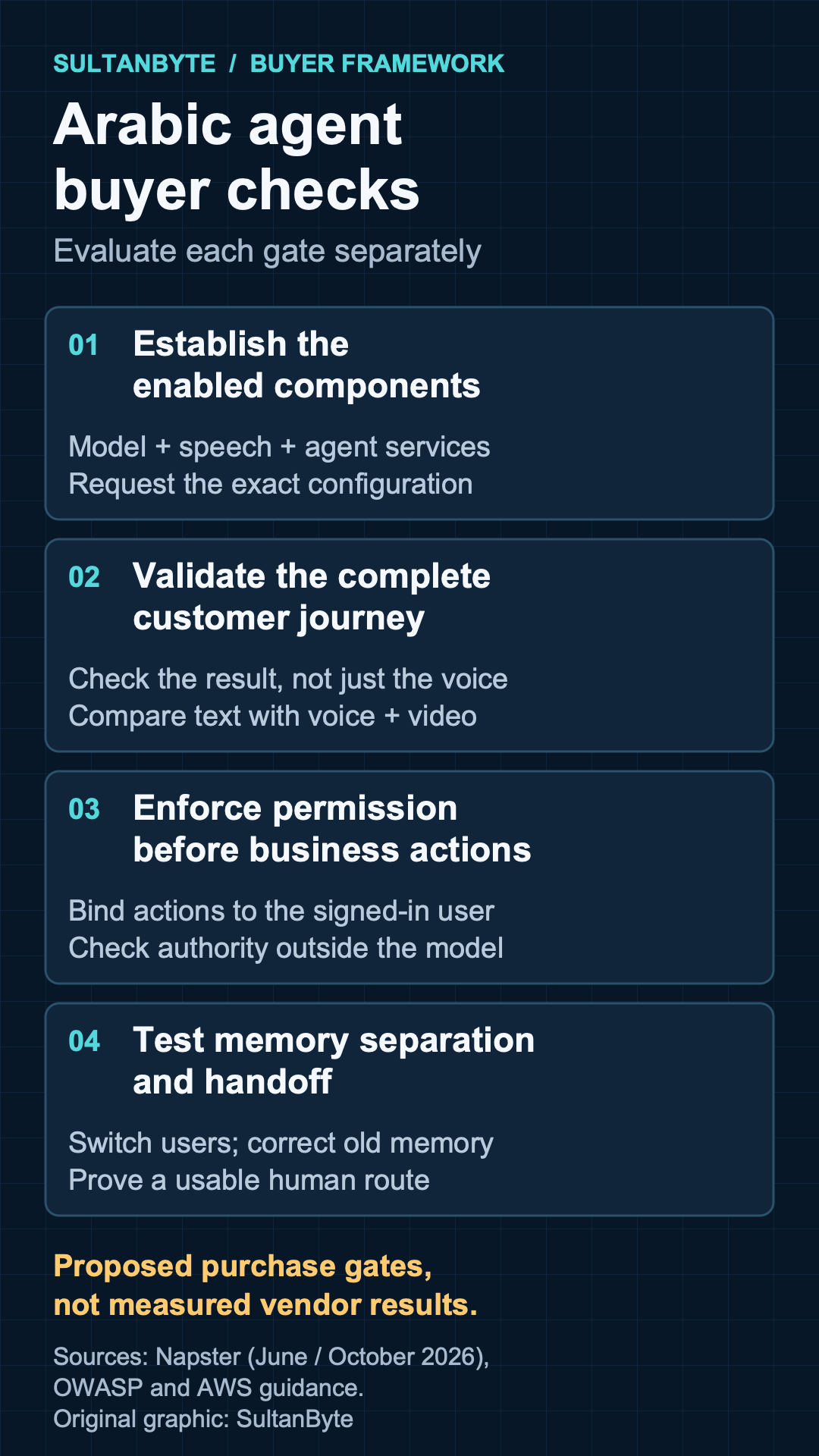
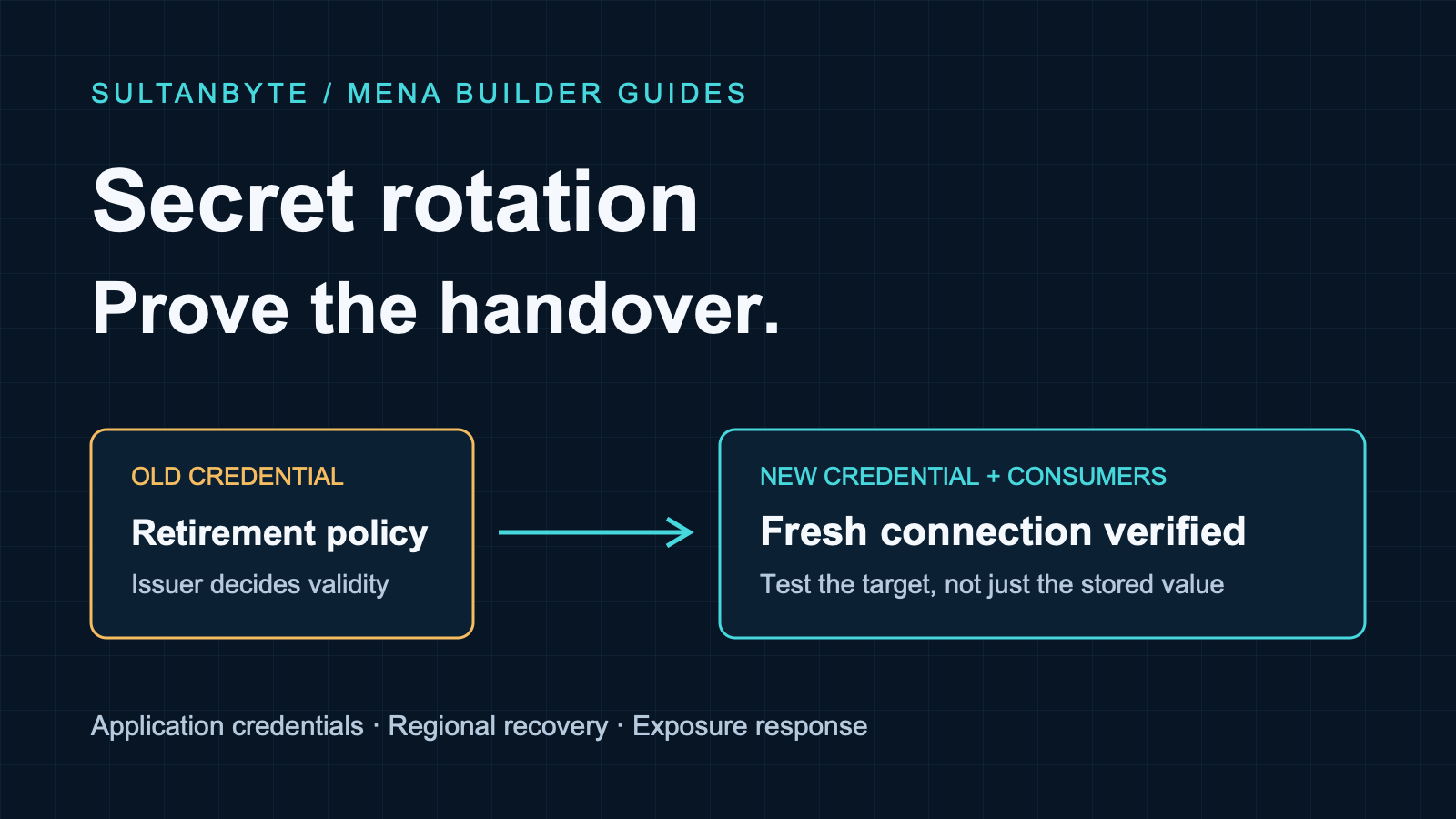
Original infographic: SultanByte. Proposed buyer framework informed by Napster's June changelog and October 2026 announcement, OWASP and AWS guidance. It is not a vendor benchmark or certification.
Persistent memory needs a boundary of its own
Remembering a customer's preference can save repetition. Remembering the wrong person's information can expose it in the next conversation. Evaluate memory independently from transcript accuracy.
Ask what the supplier means by memory: a conversation transcript, a generated summary, selected profile fields or a retrievable document store. Establish which identity owns each item, how long it remains, and how corrections reach later sessions. Do not treat a model's recollection as the authoritative order or account record.
Use synthetic customers to test separation. End one session, sign in as another customer on the same device, and ask about the earlier conversation. Repeat after logout, account switching and a human handoff. Then correct a stored preference and check whether later answers still use the obsolete version.
Request a data-flow description covering audio, video, transcripts, memory, telemetry and support access. Ask for the actual processing locations and subcontractor roles for the proposed deployment. The announcement's description of Saudi-developed capabilities does not answer where every component processes or stores information. Have the responsible team assess the particular Saudi or UAE deployment rather than approving a generic regional diagram.
Keep a usable route when speech is the wrong interface
Customers should be able to see that they are interacting with AI, stop its speech and move to text or a human route. Test those controls with keyboard navigation and assistive technology, including while the agent is speaking or waiting on a failed tool call.
W3C's audio-control explanation discusses how automatically playing sound can interfere with screen readers and encourages user-initiated playback. Its autoplay criterion is not a blanket rule for two-way calls. Use it as one accessibility reference, then test the actual conversational interface rather than assuming a speaking avatar is accessible.
A buyer's acceptance record should identify the enabled components, permitted actions, observed failures and the person who can stop the deployment. Require a working handoff with enough context for the human operator, without unnecessarily sharing the customer's entire history.
The partnership gives enterprises a specific integration to evaluate. Approve a limited rollout when the exact service can complete the chosen journey, enforce its access boundaries and recover honestly from failure. Expand its authority only after testing the additional actions, not because the conversation has become more convincing.